
Basement Leak Detection Chicopee MA Homeowners Trust
Basement leak detection in Chicopee tells you where the water in your cellar is really coming from: a plumbing leak, groundwater, a foundation crack, a window well or a sewer backup. We test each source, map the moisture and give you a plain answer with the right fix, so you do not pay for waterproofing you do not need.
This helps owners with damp floors, musty rooms or a sump that never rests, and buyers who want the truth before closing. When you call, we ask when the water appears and where it collects, give a price range and set a visit. You get an answer in writing, with photos, that you can show a contractor or an insurer.
What Basement Leak Detection Includes in Chicopee
Every wet cellar has a different story, so we test in an order that rules out causes one by one. By the end of the visit, you know which source is responsible and which ones are not, and you avoid paying for work aimed at the wrong problem.
Meter and Plumbing Test
We shut off all fixtures and watch the water meter, then check supply lines, the water heater, the boiler and the washer hookups for slow drips that keep a floor damp for weeks without any obvious puddle.
Moisture Map of Walls and Floor
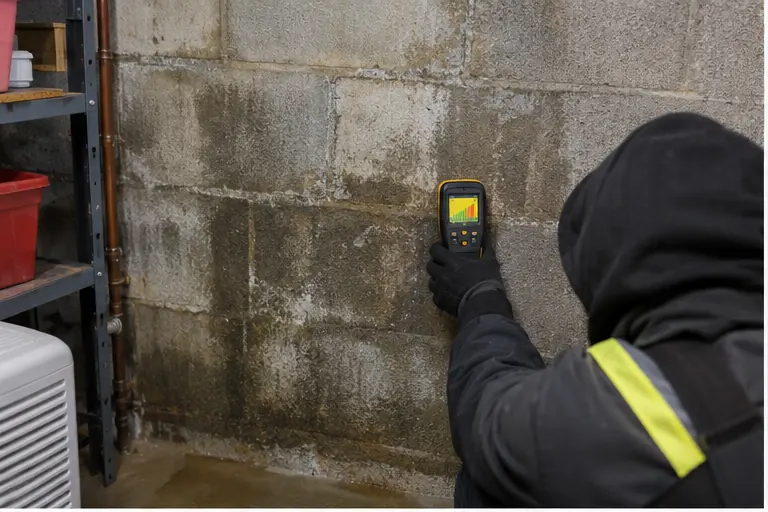
A moisture meter and thermal scan trace damp zones across the walls and slab, which shows whether the water travels from above, from the side or from below, and where it first enters the room.
Cracks, Window Wells and Sump
We inspect foundation cracks, window wells and the sump pit, and test whether the pump starts, runs and clears water as it should, including the float, the check valve and the discharge line outside.
Floor Drain Camera Look and Report
A camera checks the drain for backup damage, and you receive a clear report with photos, moisture readings and a short list of next steps, ranked from the most urgent to the least.
Why Chicopee Basements Take on Water
Chicopee sits in a river valley, and many cellars here face water from several directions at once. These are the conditions that show up most often when we trace a wet basement.
- River valley ground: Homes near the Chicopee and Connecticut Rivers, including low streets in Willimansett and Chicopee Falls, sit on soil that holds water in wet seasons, so even a modest storm can raise the level around a foundation.
- Snowmelt and storms: Westover records nearly 50 inches of snow in a season, and spring melt plus nor’easters push water against foundations that were not built to stop it.
- Freeze and thaw cycles: Average January highs near 31 F mean ground that freezes and thaws repeatedly, which opens small cracks in older stone and block walls and lets water follow the same paths each spring.
- Old plumbing in cellars: Supply lines, boilers and water heaters in 1950s homes can drip slowly for months, and the damp looks just like groundwater.
- Combined sewer backups: The city’s older combined sewers can push water back toward floor drains in heavy storms, so a flooded drain is not always a leak.
How We Handle Basement Leak Detection Step by Step
Our process moves from your story to the source in a fixed order. Each stage rules something in or out, which keeps the answer simple and keeps the repair aimed at the real cause rather than a hunch.
- Ask when water shows up: We learn whether it appears after rain, after laundry or all year round, because timing is one of the strongest clues about the source and often settles the question before any tool comes out.
- Test the plumbing: A meter test with every fixture off shows whether a pipe is leaking, and we check the heater, boiler and washer connections by hand.
- Map the moisture: We trace damp areas across walls and floor with a meter and thermal scan, then photograph the pattern so the path of the water is clear to you and to any contractor who reads the report.
- Check cracks, grade and drains: We look at foundation cracks, window wells, the slope of the ground outside and the floor drain, using a camera where the drain needs it.
- Write the report: You get a plain explanation of the source, photos, readings and the right fix, in an order that makes sense for your budget.
Our Basement Leak Detection Services in Chicopee
Two kinds of basement problems call for their own approach, and we handle both as part of the visit, with the same tools and the same written report at the end.
Moisture and Mold Source Detection
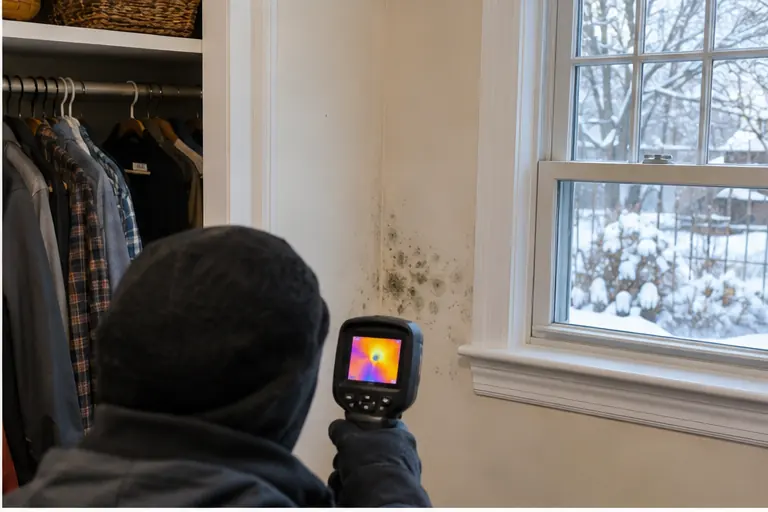
A musty smell or mold spots with no clear leak usually mean water is hiding somewhere nearby. We trace it with meters, thermal scans and plumbing tests, so moisture and mold source detection in Chicopee ends with the real cause named and the damp area traced, not a spray over the stain. Cleaning mold without fixing its water supply only buys a few weeks before it returns to the same wall, and we explain how long a wall needs to stay dry before any repainting.
Foundation Crack and Window Well Leaks
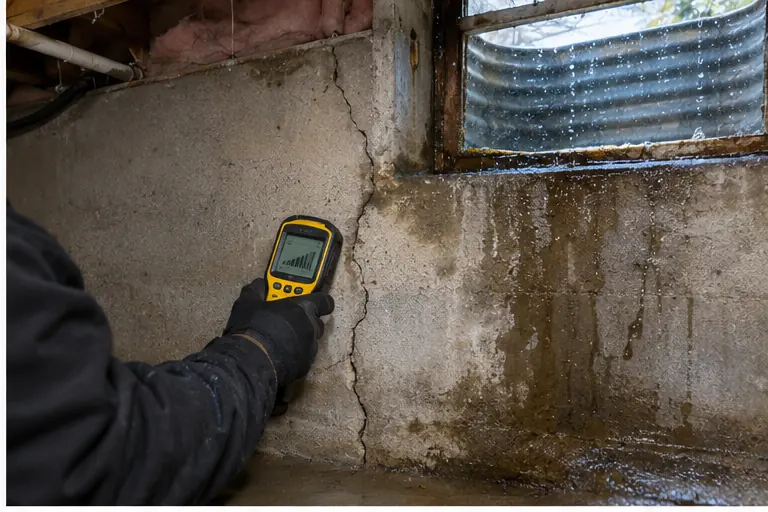
Seepage at cracks and window wells after rain is common in older foundations. We find where water enters and how much comes through, so the repair targets the right spot, whether that means sealing a crack, regrading soil or adding a better window well cover. We photograph each entry point and note how fast water comes through during a test.
How Much Does Basement Leak Detection Cost in Chicopee?
Expect to pay about $150 to $450 for a basement investigation in Chicopee, with the eventual fix depending on the source we confirm. Quoting by phone costs nothing, and you hear the exact figure at your door first.
| Basement visit | Typical range |
|---|---|
| Meter test and quick moisture check | About $150 to $250 |
| Full moisture map with plumbing test | About $250 to $350 |
| Added drain camera and crack review | About $350 to $450 |
| Late visit during a storm | Add about $100 to $250 |
How easy the cellar is to reach, any finish materials over the walls, the number of fixtures to test, the time of the visit and whether you need a report for an insurer or buyer all move the price. We explain each beforehand, and repair work is priced only after the source is known. If a plumber is needed, we tell you which pipe and how it can be reached, and if a waterproofing contractor is needed, we hand over the moisture map so the quote covers only the walls that actually leak.
Plumbing Leak or Groundwater? How to Tell
If water shows up without rain, it is often plumbing. If it follows storms and snowmelt, it is often groundwater. This quick comparison helps you spot the pattern before we arrive, and our tests confirm it. Many cellars have both problems at once, which is why we run the plumbing test before anything else on the visit.
| Clue | Plumbing leak | Groundwater |
|---|---|---|
| Timing | Appears in dry weather and keeps coming | Follows rain, melt and wet seasons |
| Location | Near pipes, heater, boiler or laundry | Along walls, cracks, corners and floor edges |
| Smell | Usually clean, sometimes musty over time | Earthy or damp, sometimes with mineral marks |
| Meter test | Meter moves with taps off | Meter stays still |
A drain that smells or floods during big storms may point to a sewer backup, which needs its own test. Mixed answers are common in older houses, so we report what each test showed and what it means for your next step, in plain words, with the readings and photos attached for your records.
Recent Basement Leak Detection Jobs Near Chicopee
Crews from our company recently finished basement investigations across Chicopee, and satisfied owners were glad to learn the real source of their water before spending money on repairs or waterproofing. Photos from recent work appear below.
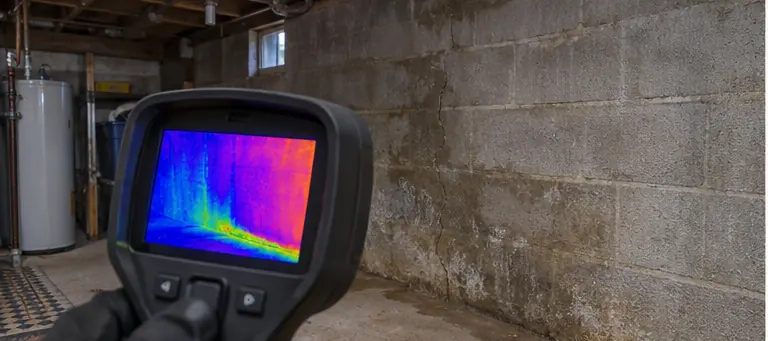
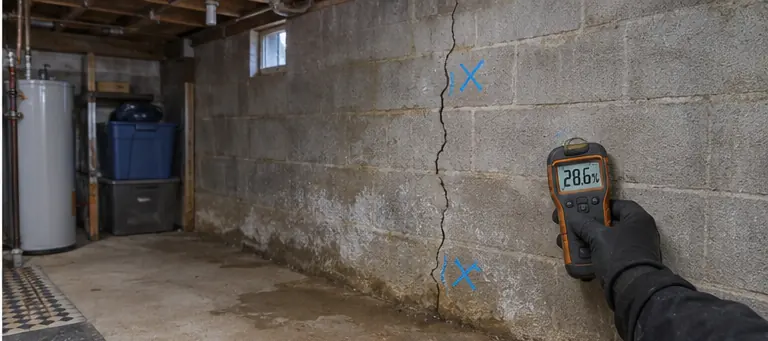
These two images show the damp zone on a wall and the source we traced it to.
Protecting Your Things While We Test
Wet cellars hold stored items, appliances and electronics, so a few quick steps keep them safe. These help whether we are already on the way or the visit is a few days off, and they keep the testing area clear and safe.
- Move boxes, rugs and furniture off the floor onto shelves or pallets
- Unplug electronics and appliances in any wet area
- Do not stand in water near outlets, panels or extension cords
- Keep the sump pump running and the discharge line clear
- Take photos of the water and damage for your records and any insurance claim
- Open windows or run a fan to help air circulate and slow the spread of damp
- Switch off power at the panel if water reaches outlets, and call an electrician before turning it back on
Related Leak Services in Chicopee
A wet basement can have causes beyond the walls, from a slab pipe to a damaged sewer. These services cover what we most often find alongside a damp cellar, and we can add any of them to the same visit so you get one report.
- Slab and under floor leaks that surface as damp patches on the cellar floor
- Sewer backups at floor drains after heavy rain or snowmelt, tested with a camera and dye
- Pipe leaks in cellar ceilings, walls and utility rooms, where drips often go unseen for weeks
Basement Help Across the Chicopee Valley
We investigate wet cellars in Chicopee Falls and Willimansett, where the rivers shape the soil, and in Ferry Lane and Chicopee Center, where older block foundations are common. Neighbors in Springfield and Agawam get the same visit.
Wherever you are in ZIPs 01013, 01020 or 01022, tell us when the water shows up and where it collects. We bring the meters, the camera and the experience to work out whether it is plumbing, groundwater or something else.
Wet Basement Questions Answered
Wet cellars raise questions about causes, repairs and timing. These short answers cover leaks versus groundwater, waterproofing, seasonal water and sewer backups.
Notice when it shows up. Water with no rain often points to plumbing; water after storms or snowmelt points to groundwater. A meter test with all taps off also tells you if a pipe is leaking.
We locate the source first. If it is groundwater, the report tells a waterproofing contractor exactly where to work, so you only pay for what is needed.
Snowmelt and spring rain raise the water table around your foundation. Cracks and old block walls let it in. We map where it enters so the fix is in the right spot.
Yes, water at a floor drain can be a backup, not a leak. If it smells or shows up during big storms, we check the drain with a camera.
It can be. A pump that never stops may signal high groundwater or a plumbing leak feeding the pit, and we test both before you replace it.