
Moisture and Mold Leak Detection Chicopee Owners Request
Moisture and mold source detection in Chicopee locates the water that feeds mold, from a slow pipe leak inside a wall to condensation, roof leaks or a damp basement. We map moisture and humidity, test nearby plumbing and give you the source in writing so the mold does not come back after cleanup.
Owners, tenants and landlords use this visit when a smell or stain will not go away. After you call, we ask where the mold appears and when, give a range and book a time. After the visit, you receive a written report with photos that a remediation company, a landlord or an insurer can read and act on.
What Mold Source Detection Includes in Chicopee
Finding the cause of mold takes more than a look at the stain, because the water often sits somewhere else. This visit measures, scans and tests until the source is named, then puts the answer on paper.
- Moisture map and humidity readings: A pin and pad meter charts damp zones across walls and floors, while a hygrometer records room humidity, so we can tell a localized leak from a house wide moisture problem.
- Plumbing tests near the mold: We test supply and drain lines close to the affected wall or floor, because a slow leak behind tile or drywall is a very common reason mold keeps returning.
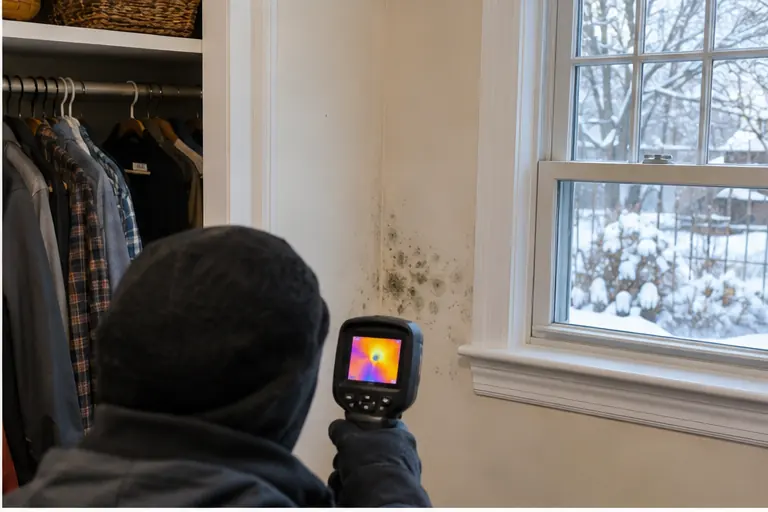
- Thermal scan and borescope look: A thermal camera shows cold, wet patches inside walls, and a small borescope can look into a cavity through a tiny hole without opening the whole surface.
- Report for a remediation company: You receive photos, readings and a plain statement of the source, which a remediation company can use to scope cleanup in the right place at the right size.
Why Mold Keeps Coming Back in Chicopee Homes
Cleaning off mold without fixing the water behind it only buys a short break, and the stain usually returns within weeks. Chicopee homes have several moisture patterns that explain why the same spot turns dark again each season, and these are the four we meet most.
Humid Summers and Cool Basements
Warm, damp summer air meets cooler cellar walls and condenses, so moisture builds on block, stone and framing even when no pipe or crack is leaking, and the surface feels clammy long before it looks wet.
Cold Exterior Walls in Winter
With average January highs near 31 F, outside walls and closet corners stay cold, and indoor humidity condenses there, feeding mold behind furniture, clothing and stored boxes that block airflow, which is why the growth often appears where you least expect it.
River Valley Soil Around Foundations
Cellars in low parts of the valley sit near soil that holds water, so a wall that feels dry can still carry steady vapor into the room, and the smell grows stronger on rainy days and in the warmer months.
Slow Leaks Under Baths and Sinks
A drip under a tub, sink or toilet may leak only when used, wetting the same framing day after day while the room looks clean from outside, and mold appears on the back of a vanity or inside the cabinet wall long before a stain shows.
How We Handle Mold Source Detection Step by Step
A visit moves through five stages that narrow the cause from the surface to the source. We explain what each reading means while we work, so you see why we point to a certain wall, pipe, vent or window as the culprit.
- Study the mold pattern: We look at where mold grows, how it spreads and which surfaces it favors, because its shape often hints at a leak, condensation or poor airflow.
- Map moisture and humidity: Meters and a hygrometer chart wet zones and room humidity, giving us numbers instead of guesses about what is feeding the growth.
- Test nearby plumbing: We check supply and drain lines, fixtures and appliance hookups next to the mold, running water to see whether any wall or ceiling reacts, and watching meters for a change over several minutes.
- Scan with thermal imaging: A thermal camera reveals cold, damp areas behind finishes, and we confirm suspicious spots with a meter or a small borescope hole.
- Put the source in the report: You get photos, readings and a clear statement of the source, along with the fix that stops the moisture from returning and a note on how long the area should stay dry before any repair or repainting goes ahead.
Moisture Sources We Track Down
Moisture reaches a room in many ways, and each one needs a different fix. These are the sources we find most often when we trace mold in Chicopee houses, and every one of them can be confirmed with the right test.
- Slow supply and drain leaks inside walls, floors and ceilings, often found only by pressure or flow tests
- Condensation on exterior walls, window frames and closet corners, especially in cold snaps and in rooms with little air movement
- Basement humidity from damp block, soil vapor and poor ventilation, which spreads musty air through the whole house
- Roof and ice dam leaks that soak insulation and ceilings, and feed mold in attics and upper floors
- Dryer and bath fan vents that dump damp air into the attic or wall instead of outside the house
- Window and door leaks that wet sills, trim and nearby framing during wind driven storms
- Plumbing vents and chimneys that let rain run down inside walls
How Much Does Mold Source Detection Cost in Chicopee?
Moisture and mold source detection in Chicopee usually runs about $175 to $450. We find the source and report it, and removal is a separate job for a remediation company. Quoting by phone costs nothing, and the on site figure is agreed first, before anyone opens a wall or runs a test.
| Moisture visit | Typical range |
|---|---|
| One room, meters and plumbing test | About $175 to $275 |
| Several rooms with a thermal scan | About $275 to $375 |
| Added borescope look and report | About $350 to $450 |
| Weekend or evening visit | Add about $100 to $250 |
The number of affected rooms, how easy the walls are to reach, tile or paneling over them, how many fixtures need testing and the report you need all move the figure. We go through each of them first, and the visit stays focused on the rooms that matter and you can compare our price fairly with others you collect. Cleanup or repair is quoted separately after the source is known, and we say so before booking.
Recent Mold Source Detection Jobs Near Chicopee
We recently completed moisture investigations in Chicopee homes, and satisfied owners were relieved to learn what was feeding their mold before cleanup began, which saved them from paying twice. The photos below come from that work.
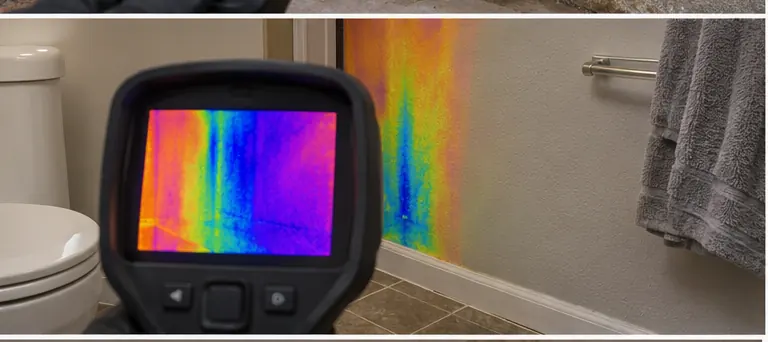
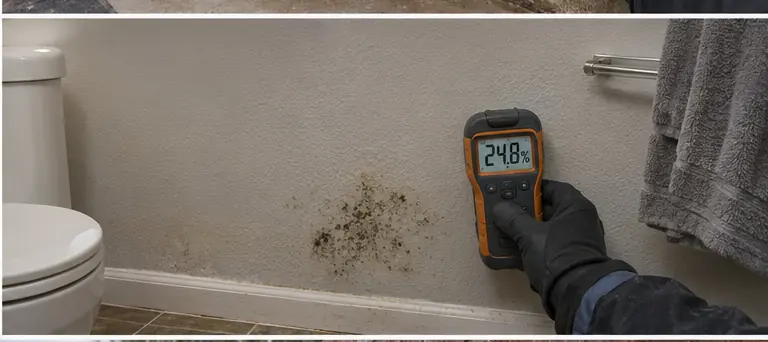
Each image pair shows the visible stain beside the source we traced it to.
Staying Safe Around Mold
Mold can irritate eyes, skin and airways, so handle it with care until the source is fixed. The Massachusetts Department of Public Health offers mold guidance, and we point you to it. Do not scrub large patches yourself, because that can spread spores around the room.
What You Can Do Now
- Keep the affected room closed off
- Run a dehumidifier if the air feels damp
- Fix any visible drip, or shut the water off
- Take photos before anything is cleaned
- Keep children and pets out of the area until it is cleaned
What To Leave to Professionals
- Large patches of mold on drywall or wood
- Cleanup after a major leak or flood
- Any work that disturbs a damp wall
- Removal that needs containment, masks or air scrubbers
- Any area larger than a few square feet
Related Leak Services in Chicopee
Mold usually traces back to water from somewhere else in the house, sometimes a room away from the stain. These related services cover the sources we find most often in local houses, and we can add any one of them to the visit when the readings point there.
- Basement leak checks for damp cellar walls and floors
- Hidden leak detection for slow drips inside walls and ceilings
- Roof leak checks for stains that appear near the top floor
- Bath fan and vent checks for rooms that stay steamy after every shower or cooking session
Moisture Help From Sandy Hill to Westfield
We trace mold and dampness in Sandy Hill, Aldenville and Smith Highlands, where many homes have basements, attics and older siding that hold moisture. We also visit Westfield, Easthampton and Holyoke for owners who keep finding the same stain after each cleaning, and we bring the same equipment to every address.
For addresses in ZIPs 01013, 01020 and 01022, tell us which room smells or where the stain appears. We bring the meters, the thermal camera and the patience to find the water feeding it.
Mold and Moisture Questions Answered
A musty smell raises questions about causes, cleanup and whether it is a leak or just humidity in the air. These short answers cover what the smell means, who removes mold and how to tell a leak from humidity.
Musty smell means moisture somewhere, often a slow leak in a wall, damp basement air or condensation on cold walls. Moisture meters and thermal imaging show where it is.
We locate the moisture source and report it. For removal, a remediation company uses our report so they fix the right area.
Leaks make one wet spot that stays wet; humidity spreads across cold surfaces. Our readings show the pattern so you know which one you have.
It often does if the water source remains. Cleaning removes the growth, but only fixing the moisture keeps it from returning, which is why the source report comes before any cleanup.
Most visits take a short appointment for one or two rooms, and longer for a whole house or when we need several scans. We tell you the time needed when you book.