
Water Line Leak Detection Chicopee MA, One Hole Not a Trench
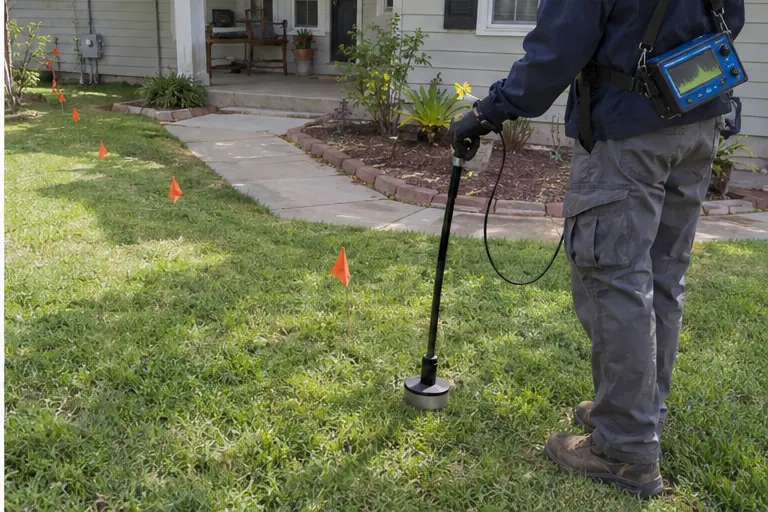
Water line leak detection in Chicopee locates leaks on the underground pipe between the street and your home, and on yard lines and outdoor spigots. We trace the pipe, listen through the ground and use tracer gas when needed, so the crew digs one small hole instead of trenching your whole yard.
This service is for owners with a wet patch on the lawn, low pressure at the taps or a bill that climbs with nothing running indoors. Once you phone in, we ask about the yard and the meter, name a price range, and fit you into the first slot that works for you, so water stops washing out the soil.
What Water Line Leak Detection Includes in Chicopee
Buried leaks are hard because nothing about them is visible. A full visit combines several steps, each one narrowing the search along the pipe, until we can set a single flag in the grass and say dig here.
- Locate and mark the line: A pipe locator follows the path from the curb stop to your cellar wall, because many owners do not know where their line runs, and the crew must dig in the right place.
- Curb to house pressure test: We isolate the line and hold a gauge on it. If pressure drops, the leak is somewhere along that run, and we can start listening with confidence instead of guessing blindly.
- Acoustic listening and tracer gas: A ground microphone hears escaping water through soil, and on quiet leaks we push a safe tracer gas through the pipe and detect it at the surface to confirm the exact point.
- Depth estimate, report and quote: We estimate the depth of the break, deliver a dated report with photos, and provide a repair or replacement quote so the dig is priced before anyone brings a shovel.
Why Underground Water Lines Leak in Chicopee
Buried pipes live a hard life. Winter frost, roots, shifting soil and plain age all take a toll, and the lines serving older Chicopee streets have had decades to wear. Four causes explain most of the leaks we trace, and each leaves its own clues.
- Old galvanized and lead lines: Some older homes still have galvanized steel or lead service pipe, and the city is building a service line inventory under state and federal lead rules. These materials corrode and crack over time, and a repair on one section rarely stops the next failure.
- Frost heave in hard winters: Average January highs near 31 F push frost into the ground, and heaving soil bends and splits pipe. Lines often run roughly four to five feet deep to stay below the frost, so a break can be buried in cold, heavy clay.
- Tree roots: Roots seek moisture and can crush or pull apart joints on older lines, especially under mature trees along the long front yards in Fairview and Burnett Road, where roots reach the pipe easily.
- Settling and disturbed soil: Past digging, driveway work and drainage changes can shift the ground around a pipe, stressing a joint that has held for forty years until the soil moves, and then it leaks.
How We Handle Water Line Leak Detection Step by Step
Our five steps take a leak that you cannot see and turn it into a flag in the grass. The order saves money, because each step tells us whether the next one is even needed, and many jobs end sooner than expected.
- Meter test and phone check: We confirm the meter moves with the house quiet, then ask where the line enters the cellar and where the curb stop sits, so we arrive prepared with the right locator and microphone.
- Locate the line: A pipe locator traces the route from the curb stop to the cellar wall and flags it on the ground, so the dig crew never has to guess where the line runs.
- Pressure test the run: We isolate the line with a gauge and look for a pressure drop, which proves the leak is on the buried run and not inside the house plumbing.
- Listen, correlate and use gas: Acoustic gear and a correlator narrow the leak to a few feet, and tracer gas confirms quiet breaks that sound alone cannot settle.
- Mark and report: We mark the dig spot, photograph it and write up the depth, pipe material and your repair or replacement options in a dated report.
Our Water Line Leak Detection Services in Chicopee
Buried water leaks come in two main kinds, the main run from the street and the smaller lines around the yard. We handle both, and each has its own tools, its own quick checks and its own typical repair.
Water Main and Service Line Leak Detection
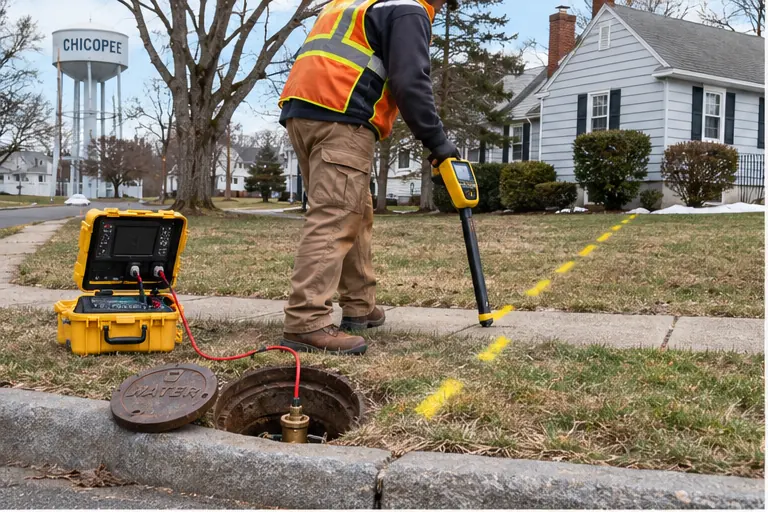
The line from the curb stop to your cellar wall is the most common underground leak in Chicopee, often old galvanized or copper. We trace it, test it and mark the break, as our water service line leak detection work shows, so the repair is a small, planned dig and not a surprise trench.
Outdoor Spigot and Yard Line Leaks
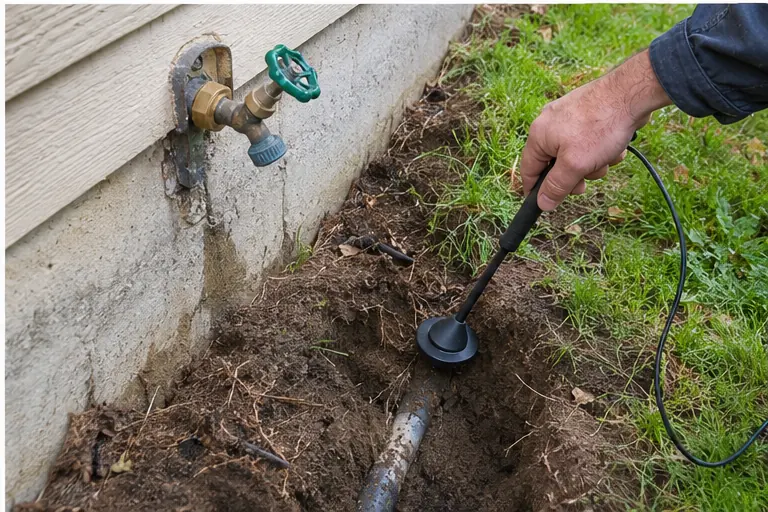
Frost free spigots can split inside the wall, and yard hydrants and garden lines leak underground. We test each branch and mark the failure, without touching healthy sections, so you do not pay to dig up lines that work fine.
Lead and Galvanized Service Line Checks
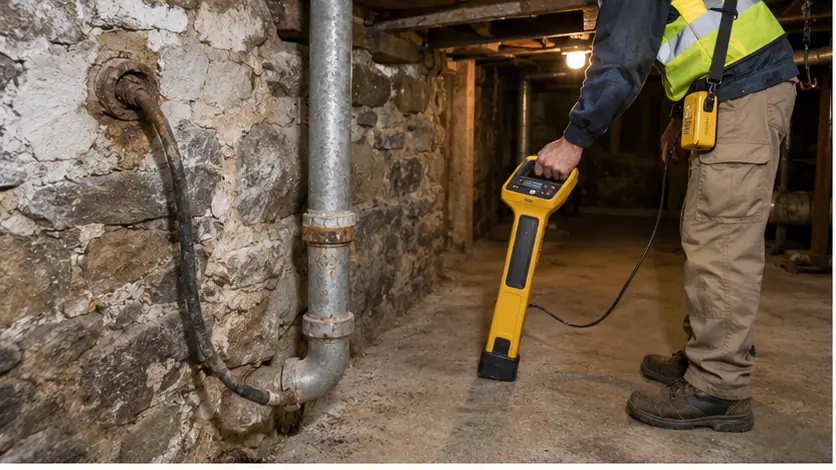
Older lines may contain lead or galvanized steel. We note the pipe material at the cellar entry and record it in every report, which helps you plan a replacement and know whether the city inventory affects you.
How Much Does Water Line Leak Detection Cost in Chicopee?
A buried line check in Chicopee usually runs about $250 to $650, and digging and repair are quoted only after the spot is marked. A phone quote costs nothing, and we confirm a firm figure on site before any work begins.
| Line job | Typical range |
|---|---|
| Locate and test a short line | About $250 to $400 |
| Acoustic search on a long run | About $350 to $550 |
| Tracer gas on a quiet leak | About $450 to $650 |
| After hours call out fee | Add about $100 to $250 |
Line length, how deep the pipe sits, the surface above it and the time of day affect the figure. Driveways and walkways take more care than open lawn, and quiet leaks need tracer gas. Digging and repair are priced separately, only after the spot is marked. A very long line, or one running under a driveway or patio, may cost more, and we tell you this before booking. If we find the leak quickly, you only pay the lower range.
Do You Have a Lead Water Line? What Chicopee Owners Should Know
Some older homes may still have lead or galvanized service lines, and Chicopee is building an inventory of them. We note the pipe material in every report, and you can do a quick check where the pipe enters the cellar, using nothing more than a key and a magnet.
- Scratch test: Scratch the pipe lightly with a key. Lead is soft and turns shiny silver under the scratch, while copper looks orange and galvanized steel looks gray and hard.
- Magnet test: A magnet sticks to galvanized steel but not to lead or copper, so it helps rule one material in or out in a few seconds, with no tools, and you can do it right now.
- Ask the city: Chicopee received a state grant to plan its lead service line inventory, so check with the Water Department for updates on your own address and any lead related notices. A short call to the department can tell you whether your address has been surveyed yet.
Recent Water Line Leak Detection Jobs Near Chicopee
We have traced buried water leaks across Chicopee, from long front yards in Fairview to older lots in Chicopee Falls, and each owner went home with a marked spot and a small dig instead of a trench. See recent photos below.
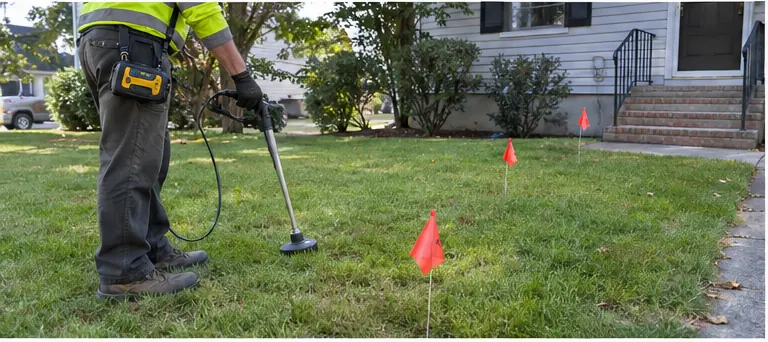
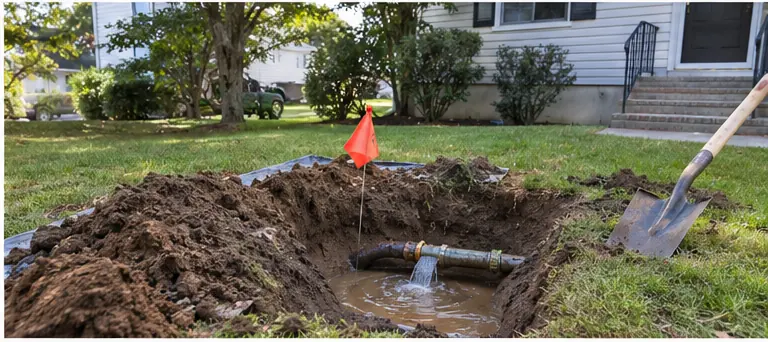
Each photo pair shows the flag, the dig and the restored spot.
Protecting Your Lawn, Driveway and Walkway
A leak is bad enough without a ruined yard. Massachusetts law requires a Dig Safe call before any digging, and we plan every dig to be small, careful and easy to restore.
How We Protect Your Property
- Dig Safe is contacted before any digging starts
- We mark one small hole instead of a trench
- Sod is cut, saved and replaced afterward
- Walkways are protected with plywood or mats
- Driveways are avoided where possible
- Photos are taken before and after
Driveway and Hardscape Options
- Pull a new line under the driveway rather than cutting it
- Use a trenchless approach where the pipe allows
- Plan the dig at the edge of the paving
- Choose the replacement route with a quote first
- Restore concrete or pavement at the cut line
- Compare the cost of repair against rerouting
Related Leak Services in Chicopee
Underground leaks often show up as indoor symptoms, so one problem leads to another. If your situation matches one below, we can change methods during the same appointment and tell you which is really at fault, without a second call or a second trip.
- Leaks inside the house, found with thermal imaging, listening gear and pressure tests
- High water bills that need a toilet, boiler, spigot and service line check from start to finish
- Sewer line problems that can look like a wet yard, a soggy patch or a foul smell outdoors
Buried Leaks Do Not Fix Themselves
A pinhole in a buried line becomes a bigger hole as the soil washes away around it. The water you pay for goes into the ground, and the soil can undermine paving and foundations. Finding it early keeps the dig small and the repair simple.
We trace lines for homeowners in Chicopee Falls, Willimansett, Burnett Road and Fairview, and neighbors in Ludlow and Wilbraham. Tell us what the yard and the meter are doing, and we bring the locator, the microphone and the tracer gas to find the break.
Water Line Questions Answered Plainly
Buried pipes raise questions about digging and responsibility. These short answers explain how we find the leak and what usually follows.
We locate the pipe, pressure test it, then listen through the ground with acoustic tools. For quiet leaks we push a safe tracer gas through the line and detect it at the surface, then mark the spot to dig.
Around Chicopee the owner generally answers for the service pipe on private property, and the city for its own side. We show which side the leak is on in our report.
No. Once the spot is marked, the crew digs one hole about the size of a small table. If the line is old everywhere, we price a replacement instead.
Most service lines in Massachusetts run about four to five feet deep to stay below frost. Depth matters for cost, so we estimate it before any digging.
Yes. Acoustic gear listens through pavement, and we can plan a reroute that avoids cutting the driveway if the pipe allows it.