
Pool Leak Detection Chicopee MA Pool Owners Use
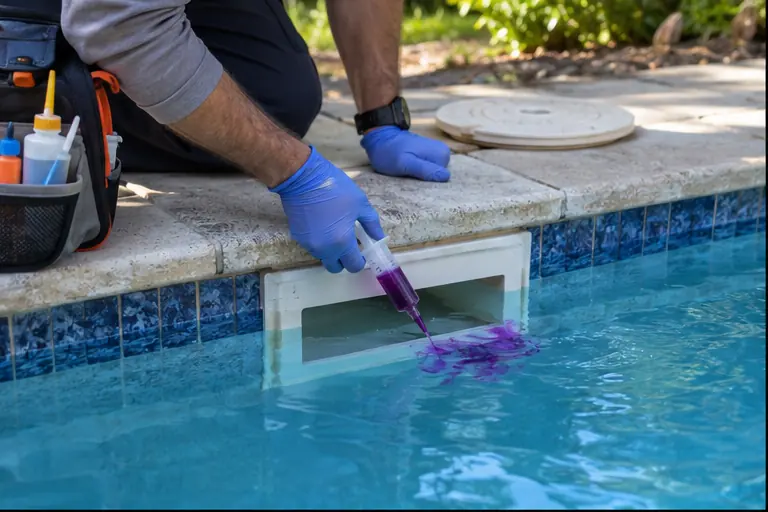
Pool leak detection in Chicopee locates where your pool is losing water, in the liner, skimmer, returns, main drain or underground lines. We start with an evaporation check, then use dye, pressure tests and listening gear to mark the leak so it can be patched or the right line repaired.
This visit is for owners of inground and above ground pools, plus condo and club pools with a mystery water loss. After you call, we ask how much the level drops, whether the loss is faster when the pump runs and where the ground feels wet. We quote a range and book a time, ideally early in the season, so a small leak does not turn into a big repair.
What Pool Leak Detection Includes in Chicopee
Every pool has several places where water can escape, so we test them in a sensible order and rule each out. The result is a clear answer on whether the pool leaks, where it leaks and what the repair involves.
- Bucket test review: We look over your bucket test results or run one on site, which separates normal evaporation from a true leak before spending time on equipment.
- Dye test at fittings and liner: A small amount of dye is released near skimmers, returns, lights and suspect liner areas, and we watch closely for it to be drawn into a crack or gap, which is the clearest sign of where water escapes.
- Pressure test and listening on lines: We isolate and pressure test each supply and return line, then listen along the run with sensitive gear to find the point where water escapes underground.
- Equipment check and report: We inspect the pump, filter and pad for drips and give you a report, plus notes on small liner holes that can be sealed if the pool allows.
Why Pools Leak in Chicopee
Our swimming season is short and our winters are hard, which puts a lot of stress on pools, covers and plumbing. This table shows the main causes we see and how each one turns into water loss by the time the pool reopens.
| Cause | What happens |
|---|---|
| Freeze damage | Water left in lines or fittings freezes and cracks pipes, skimmers and returns when a pool is not winterized properly |
| Frost heave | Ground that freezes and thaws lifts and shifts underground lines, loosening joints and opening small gaps |
| Aging liners | Vinyl hardens and thins with years of sun and chemicals, then splits at seams, steps and corners |
| Ground settling | Above ground pools shift as soil settles, stressing walls, liners and the connections around the skimmer |
| Spring startup problems | Fittings and seals that were stressed over winter show their leaks only once the pool is full again |
With nearly 50 inches of snow a season at Westover, pool decks, covers and equipment pads carry weight and moisture all winter, and small defects grow worse over time. Cold January days and early spring thaws keep the freeze and thaw cycle going well into the season.
How We Handle Pool Leak Detection Step by Step
Five checks take us from a simple bucket test to a marked leak, and we explain each one as we go. The order matters, because it rules out the cheap, common causes before the harder ones.
- Run a bucket test: We compare how much the pool drops against a bucket on the step, which tells us whether the loss is evaporation or a real leak.
- Check the pool and equipment: We look over the liner, fittings, skimmer, pump, filter and pad, noting wet soil, cracks, rust and drips that point to the likely area, and checking the pad for signs of water loss.
- Dye test the suspects: Dye released near fittings and liner damage shows where water flows into a gap, often pinpointing the leak in minutes when the leak is at a fitting or liner flaw.
- Pressure test the lines: We isolate each underground line and test it under pressure, which shows which lines hold and which lose water, including suction lines that are hard to judge by eye.
- Listen, mark and report: Listening gear finds the exact spot, we mark it and give you a report with photos and the repair or patch plan.
Pool Leaks We Locate
Vinyl Liner Holes and Seams
Small punctures, wrinkles and seam splits let water out slowly, and the loss may only show once the level falls below the damage. Dye and careful inspection find them, sometimes with an underwater look.
Skimmer and Return Fittings
Gaps around skimmers and returns are among the most common leak points, especially after a freeze, since the plastic and the liner seal move at different rates in the cold.
Main Drain
A leak at the bottom drain is hard to see, so we test the line and the fitting separately, and we say which of the two is losing water before anyone digs.
Underground Suction and Return Lines
Lines that crack from frost or movement lose water into the soil, and pressure tests show which one is failing, so you do not dig up lines that are fine.
Pump and Filter Leaks
Drips at unions, seals and valves on the pad add up over a season and often go unnoticed, because the water drains into gravel and disappears.
Above Ground Wall and Liner Leaks
Walls can seep at seams and bottom rails, and liners can tear near the wall, so we check both and look for a wet spot on the ground where the water runs out.
How Much Does Pool Leak Detection Cost in Chicopee?
Locating a pool leak here generally costs about $200 to $550, depending on the pool type and how many lines need testing. You can get a quote by phone at no charge, and the exact price is agreed at your pool before any work starts.
| Pool job | Typical range |
|---|---|
| Above ground pool, dye and visual check | About $200 to $325 |
| Inground liner, fittings and dye test | About $300 to $425 |
| Underground line pressure test and listening | About $400 to $550 |
| After hours call out | Add about $100 to $250 |
Pool size and type, how many lines need testing, how easy the equipment pad is to reach, whether a diver is needed and the report you want all move the price. We cover each one when you book, so you know the figure before we arrive and can plan around the swim season. Any liner or line repair is priced separately after the leak is found, and we explain whether a patch or a larger fix makes sense for your pool and its age.
Is Your Pool Leaking or Just Evaporating?
Do a bucket test for 24 hours. If the pool drops more than the bucket, you have a leak. Evaporation takes the same amount from both, so the difference tells the story, and wind, sun and heat do not change that comparison. Here is how to run it, using only a bucket and a marker.
- Fill a bucket with pool water and set it on a pool step so it sits at pool level
- Mark the water level inside the bucket and on the outside of the pool wall
- Leave the pump running and use the pool as usual for 24 hours, without adding water
- Compare both marks after a day, using the same ruler or tape so the readings match
- If the pool dropped more than the bucket, call us for a pool leak test, and tell us the difference you measured
Recent Pool Leak Detection Jobs Near Chicopee
This past season, our team finished pool leak investigations in Fairview and Aldenville backyards, and satisfied owners were pleased to find out exactly where their water was going. The photos below come from that work.
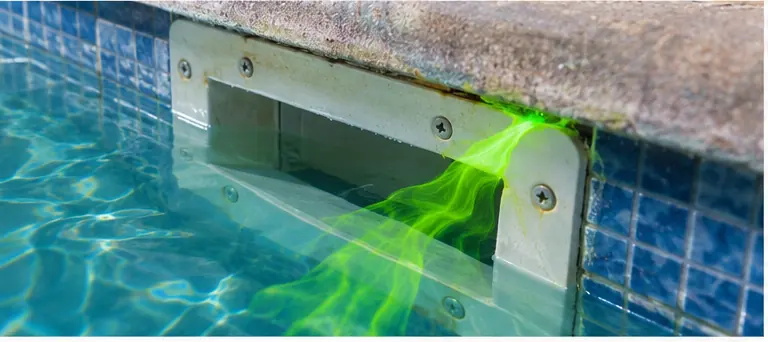
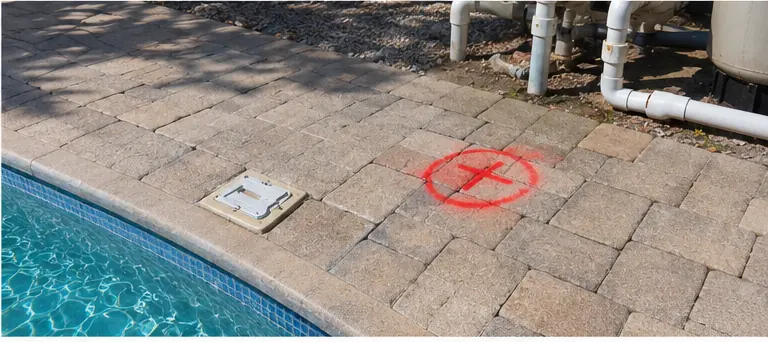
One image shows the test and the other shows the spot it found, along with the flag we left.
Before Your Pool Leak Test
A little preparation helps us test in normal conditions and avoid false readings from a pool that was just topped up or shocked. These simple steps make the visit faster and the results clearer.
- Keep the water at its normal level, since the usual height matters
- Avoid adding chemicals right before the visit
- Keep the pump on for the visit unless we ask you to turn it off
- Note how much water you add each week
- Share how the level falls, whether fast or slow
- Tell us if the pool was winterized or opened this spring
- Keep covers, toys and loose items off the pool deck so we can reach every fitting
- Have the pump and equipment pad open and easy to reach
- Tell us if a cover or alarm needs to be removed first
Related Leak Services in Chicopee
Pool water loss can also show up as a higher water bill or a wet lawn, so these related services help when a pool is not the only problem. If one of them fits, it can join this visit and share one report with the pool findings.
- Water line leak detection for supply lines running to the pool area and outdoor spigots
- High water bill checks when a fill line or a hose is quietly running during the swim season
- Commercial leak detection for condo and club pools with larger lines and equipment
Pool Help Across the Chicopee Area
We test pools in Fairview, Burnett Road and Aldenville, where backyard pools are common, and we also serve Ludlow, Wilbraham and Granby. Tell us the pool type, its age and where the soggy ground is, and we plan the right tests before we arrive.
Across ZIP codes 01013, 01020 and 01022, call early in the season, before a small leak grows. We bring dye, pressure gear and listening equipment to mark the leak so it can be fixed once.
Pool Leak Questions Answered
Pool owners ask about testing, repair and timing. These short answers cover how to tell a leak from evaporation, what we can fix and when to call.
Do a bucket test. Set a bucket of pool water on the step, mark both levels, and check after 24 hours with the pump on. If the pool drops more than the bucket, you have a leak.
We locate the leak and mark it. Where a small liner hole or fitting leak can be sealed during the visit, we say so, and line leaks and big tears get a clear repair quote.
As soon as you see the level drop more than about a quarter inch a day, or soggy ground near the pool. Early in the season is best, before damage grows.
Yes. We check the liner, walls, skimmer and return fittings of above ground pools, and test any lines that connect the pump.
Not usually. Most tests run with the pool full, though a diver or a lower water level may be needed for some liner repairs.