
A Leak Detection Report for Insurance That Holds Up
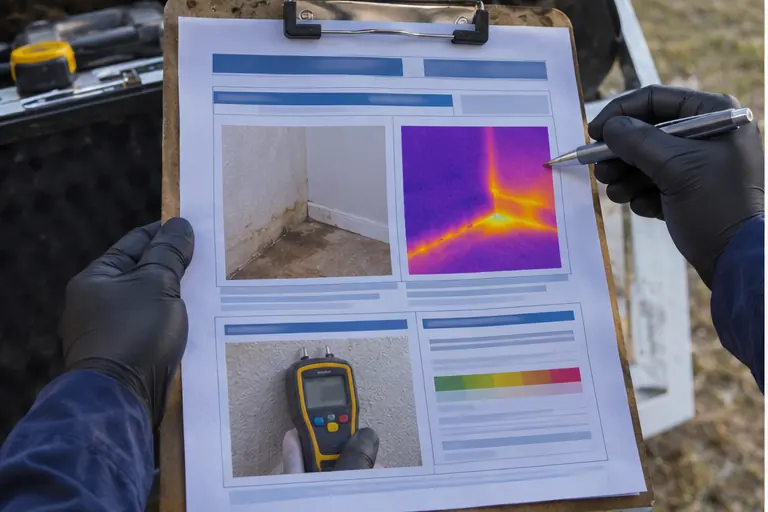
A leak detection report for insurance in Chicopee is a dated, written record of where the leak is, what caused it and how much area is wet. It includes photos, thermal images and moisture readings, so your adjuster or landlord sees clear proof instead of guesses.
This is for homeowners filing a claim, landlords, condo boards and buyers who need documented answers. When you call, we ask what happened and when, quote a price range, and schedule a visit quickly, because fresh evidence is the strongest evidence you can have, and every day of delay lets the stain dry and the story blur.
What Insurance Leak Reports Include in Chicopee
Adjusters ask the same questions every time: where, why, when and how much. Our report is built around those four questions, so there is little back and forth once you send it along with your claim.
- Full leak detection visit and cause: We run the complete search with thermal, acoustic and pressure tools and state the cause in plain terms, such as a failed supply line, a cracked drain or a seal that gave out.
- Photos before any opening: Every photo is dated and taken before we touch the wall, ceiling or floor. That order matters, because it shows the original condition the adjuster will want to see.
- Thermal and moisture maps: Thermal images and a grid of moisture readings outline how far the water spread, which helps estimate the affected area and plan the drying and repair work.
- Repair notes and a forwardable PDF: The report records pipe material, what was repaired and what still needs work, and arrives as a PDF you can send to your agent, landlord or association.
Why a Leak Report Helps Your Claim
Policies often treat a sudden burst differently from a slow leak, and policies vary, so we do not give insurance advice. What we can give you is a clear, factual record of the cause and the timeline for your adjuster to review, backed by photos and readings.
A Clear Cause Speeds the Decision
When the report names the source and shows it in a photo, the adjuster does not have to guess about the cause or send someone back to look. That tends to shorten the back and forth between you and the carrier, and it keeps your claim moving toward a decision.
Dates and Readings Build Trust
Dated photographs and meter readings show what was found and when it was found. A record that reads like a careful log, not an opinion, is easier for everyone to rely on, whether the reader is an adjuster, a landlord, a board member or a buyer.
Sudden or Gradual Is Documented
We note signs that point to a sudden failure or a slow one, such as staining patterns, mineral deposits and corrosion on the pipe. The adjuster draws the conclusion about coverage, while we supply the evidence that allows a fair decision to be made.
How We Handle Insurance Leak Reports Step by Step
Five steps produce a report that is complete and credible. We document first, search second and write last, so nothing in the paper is added from memory or guesswork after the fact.
- Photograph before touching anything: We capture the room, the stain, the ceiling and the surrounding area exactly as they are, with the date and time recorded, before a single item is moved.
- Locate the leak: Thermal, acoustic and pressure tools find the source without guessing, and we note in the report how each tool confirmed it, so the finding is not just our word.
- Map the moisture: A grid of readings shows how far the water traveled and how wet each area is, giving a measurable picture of the affected area for drying and repair planning.
- Repair or stabilize: Our licensed plumbers can stop the leak, or we mark it for your own plumber, so damage does not keep growing while the claim is still being reviewed.
- Write and send the report: You receive a dated report with photos, readings, cause and repair notes, ready to forward to your agent, landlord, board or restoration company without any rewriting.
Who Uses Our Leak Reports
- Homeowners filing a claim: You need proof of cause and extent, and a report that an adjuster can read in minutes beats a pile of phone photos and guesses, especially when the damage has already been cleaned up.
- Landlords and tenants: A neutral record shows where the water came from and which side is responsible for the repair, which avoids long disputes about blame between owners and renters.
- Condo boards and associations: When water crosses units, the report states which unit the source sits in, so the right owner and insurer handle it, and the association does not have to pay for a search that settles nothing.
- Home buyers before closing: A report on a suspect stain or smell gives you facts to negotiate repairs or a credit with the seller before you commit.
- Restoration companies: Drying crews need the source found and stopped before they start, and our readings tell them where the moisture sits, how deep it goes and where to focus their equipment.
How Much Does an Insurance Leak Report Cost in Chicopee?
A leak detection visit with an insurance ready report in Chicopee usually runs about $200 to $500, depending on the size of the area and the number of floors or units involved. The phone estimate is free, and we settle on a firm price once we see the property.
| Report job | Typical range |
|---|---|
| One room, single source | About $200 to $350 |
| Two floors or several rooms | About $300 to $500 |
| Multi unit building | About $400 to $650 |
| After hours surcharge | Add about $100 to $250 |
Access to the area, the finishes in the way, the number of fixtures tested and the hour of your call set the figure. Needing the report quickly for a deadline is worth mentioning when you call, so we can plan the visit around it. A longer report that covers several rooms or units takes more time to write, and we say so up front. If the claim needs extra photos or a second visit to confirm drying, we quote that separately and explain why.
Recent Insurance Leak Report Jobs Near Chicopee
Our team has documented leaks for owners and landlords all over Chicopee, and the clear paperwork helped them move through their claims with less stress. A few examples of the photos and readings we collect are below.
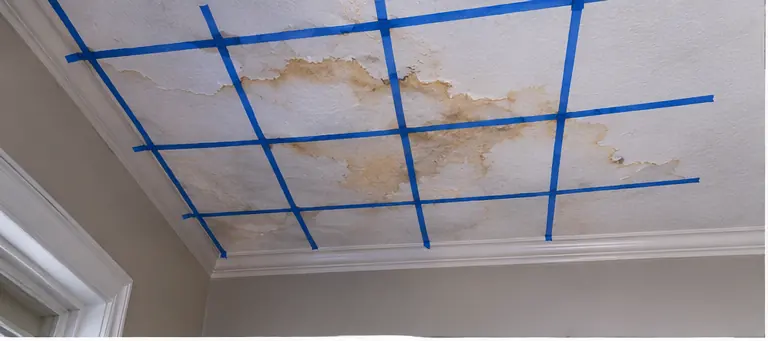
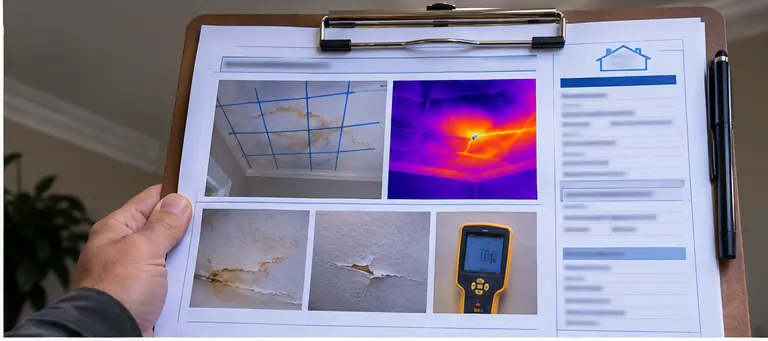
Each report ends with the cause and next steps.
What to Do Before the Adjuster Comes
What you do in the first hours matters for your claim. These simple steps protect your home and keep the evidence intact, and they take only a few minutes before we arrive.
- Stop the water at the main, so damage does not keep growing while you wait for help
- Take your own photos and video of every wet area, wide shots and close ups
- Keep damaged items until the adjuster has seen them, even if they are ruined
- Save receipts for any emergency repairs, drying equipment or cleanup supplies
- Do not throw out the failed pipe or fitting, since the adjuster may want to see it
- Write down when you first noticed the problem, with the date and what you saw
- Call us so we can document everything before any repairs begin
Related Leak Services in Chicopee
Most claims start with one of a few common leak types. If yours is one of these, we can cover the search and the report in the same visit, and you only need to arrange one appointment.
- Burst pipe leaks: After a freeze or sudden failure, with photos that show how and where the pipe split.
- Hidden leaks in walls and ceilings: Where the stain is visible but the source is not, mapped with thermal and moisture tools.
- Condo and apartment leaks: Where water crosses units and the report must name the source unit clearly.
Evidence Is Easier to Gather Early
Evidence fades fast. Stains dry, failed parts get thrown away, and memory blurs the timeline. A report prepared while the damage is fresh protects you from arguments later and gives every party the same facts to work from.
We prepare reports for owners in Chicopee Center, Fairview and Chicopee Falls, and for neighbors in Springfield, Longmeadow and East Longmeadow. Call and tell us what happened, and we will bring the tools and the camera to record it properly.
Insurance Report Questions Answered
Insurance paperwork brings plenty of questions. These short answers cover who pays for leak detection, what the report contains and how we handle shared buildings.
Some policies pay to find the leak when the damage is covered, and some do not. Check your policy or ask your agent. Either way, our report gives your adjuster the cause and photos they will ask for.
Date, address, cause of the leak, photos, thermal images, moisture readings, pipe type, what was repaired and what still needs work. It comes as a PDF you can forward.
Usually yes. We test both units, run fixtures one at a time and track moisture, then state the source unit in the report.
We can answer an adjuster’s questions about what we found, since the report speaks for itself. You stay in charge of the claim and the decisions about repairs.
Yes. We write the same dated report for purchase negotiations, rentals and disputes, with the cause, photos and readings that each party needs.